The Posture Decoder: Brandon Harshe on Why Standing Up Straight Isn't Enough
Upper cervical chiropractor Brandon Harshe explains why posture problems start at the top of the spine — and why willpower alone won't fix them.
Brandon Harshe · · 8 min read
Reviewed by Holistic Health Clinical Team

Key Takeaways
- ✓Postural distortions like head tilt and uneven shoulders are diagnostic clues pointing to specific vertebral misalignments
- ✓Conscious corrections like 'standing up straight' are temporary — they collapse the moment attention shifts elsewhere
- ✓Upper cervical adjustments at C1 and C2 can produce whole-body postural changes without the patient actively trying
- ✓Forward head posture is linked to neck pain, headaches, impaired balance, and even reduced respiratory function
- ✓The spine operates as a kinetic chain — a misalignment at the atlas can cascade into shoulder, hip, and pelvic imbalances
Most chiropractors talk about the spine. Brandon Harshe reads it like a language. Walk into Harshē Chiropractic in Maricopa, Arizona, and before you sit down, before you fill out a form, he's already gathering data — from the way you stand. A head tilted two degrees left. A right shoulder riding higher than the left. A pelvis that hitches up on one side. To the untrained eye, these are invisible asymmetries, the kind of thing that only registers in a photograph when someone points it out. To Harshe, they're a map of exactly what's gone wrong inside the spine, vertebra by vertebra, like reading sheet music and hearing the note that's off-key.
This is upper cervical chiropractic — a subspecialty that zeroes in on the atlas and axis, the two vertebrae at the very top of the spinal column, sitting just beneath the skull. It's a discipline built on a deceptively simple premise: that the body's posture tells a structural story, and the opening chapter is almost always written at the top. While mainstream chiropractic casts a wide net — adjusting lumbar vertebrae for low back pain, thoracic segments for mid-back stiffness — upper cervical work operates with a watchmaker's precision, focusing on the two bones that bear the weight of the skull and house the brainstem's most critical real estate.
Reading the Body's Blueprint
Harshe's clinical method starts where most practitioners' ends — with the naked eye. Before imaging, before palpation, before any of the tools that modern medicine uses to peer inside the body, he performs a postural assessment that functions as a kind of orthopedic Rosetta Stone. The language is structural, and Harshe has spent his career learning its grammar.
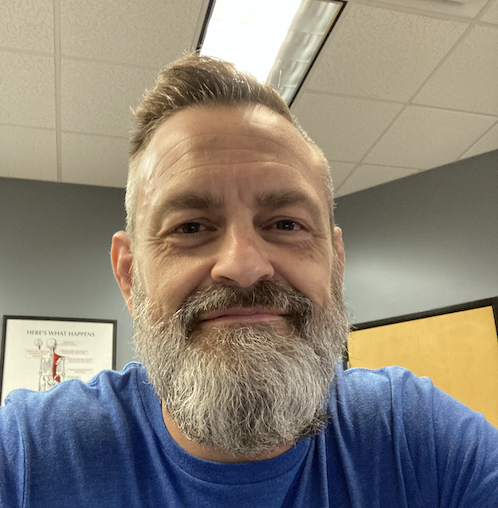
"The way I practice chiropractic is very posture based, with posture being one of the main things I look at before and after a chiropractic adjustment. For example, if a patient's head is tilted left, I know their C1 vertebra has misaligned toward the right, or the base of the skull is misaligned in relation to the C1 on the right side. A high shoulder means a misaligned first rib on that same side, or maybe even a misalignment of their C6 and/or C7 vertebrae."
What makes this approach distinct from general chiropractic is its diagnostic specificity. In a typical chiropractic office, a patient presenting with neck pain might receive a series of cervical adjustments across several segments. The approach is regional: the neck hurts, so we adjust the neck. Upper cervical work inverts that logic entirely. The premise, supported by a growing body of biomechanical research, is that the atlas vertebra sits at a neurological and structural crossroads unlike any other point in the spine. Weighing just a few ounces yet supporting a skull that averages ten to twelve pounds, the atlas is the fulcrum on which the entire spinal column balances. When it shifts — even by millimeters — the body compensates downward in predictable, measurable patterns: the head tilts, the shoulders torque, the thoracic spine curves, the hips rotate, the legs appear to differ in length.[1]
This compensatory cascade is not theoretical. A 2019 systematic review and meta-analysis published in Current Reviews in Musculoskeletal Medicine confirmed what upper cervical practitioners have long observed clinically: forward head posture is significantly correlated with neck pain and disability, and the effects don't stop at the cervical spine. The review documented cascading impacts including shoulder tension, impaired static balance, altered respiratory mechanics, and increased frequency of tension-type headaches.[2] The spine, the data increasingly shows, doesn't malfunction in isolation. It malfunctions in sequence — and the sequence nearly always begins at the top.
Research into functional scoliosis and leg-length discrepancy further supports this model, demonstrating that apparent asymmetries in the pelvis and lower extremities frequently originate from compensatory mechanisms higher in the spinal column rather than from structural problems in the legs or hips themselves.[3] What presents as a hip problem may, in Harshe's framework, be the body's best attempt to keep the head level despite a millimeter-scale shift at C1.
The Willpower Trap
Ask anyone with poor posture what they've tried, and you'll hear a version of the same story. They sit up straighter at their desk. They pull their shoulders back when they catch their reflection. They buy ergonomic chairs, lumbar pillows, posture-correcting devices that vibrate when they slouch. It works for a few minutes — sometimes an hour, on a particularly disciplined day. Then a phone buzzes, a child calls out, a meeting starts, a thought intrudes — and the body sinks back into its familiar slump, as reliably as water finding its level.
Harshe has heard this story hundreds of times, and his response reframes the entire problem. The issue isn't effort. It isn't awareness. It isn't discipline. The issue is that conscious postural correction is fighting the body's structural reality — and the body's structural reality always wins.
"In chiropractic we have a saying that posture is a window to the spine. So many people think that all they have to do is stand up straight, sit up straight, and/or throw their shoulders back. That's all fine and dandy until that person gets distracted by something and then their corrected posture falls by the wayside and they're back to slumping and slouching. But after a chiropractic adjustment, the posture will just be better and it doesn't matter if that person is thinking about it or not!"
This is a clinically important distinction, and it cuts to the heart of why so many patients feel like posture improvement is a personal failing. Conscious postural correction is a cognitive task — it demands sustained executive attention, which is a finite neurological resource. The prefrontal cortex can only maintain conscious override of a default motor pattern for so long before fatigue, distraction, or competing cognitive demands redirect that resource elsewhere. The moment attention is redirected — to work, to a conversation, to scrolling, to a child's question — the body defaults to its structurally determined resting posture. If the structural issue, the vertebral misalignment, hasn't been addressed, no amount of mindfulness or ergonomic investment will produce lasting change.
The analogy Harshe implicitly draws is architectural: you can repaint a house with a cracked foundation, but the cracks will keep showing through. You can hang new curtains and replace the siding. The cracks return. Because the problem was never cosmetic — it was structural. The foundation, in the case of posture, is the alignment of the upper cervical spine. And the paint, in this analogy, is the conscious effort to "stand up straight" — effort that addresses the visible symptom while leaving the structural cause untouched.
Research on sagittal plane spinal alignment supports this framework directly. A case report published in the Journal of Physical Therapy Science documented that structural correction of spinal curves through targeted techniques produced measurable and sustained postural improvement — changes that persisted beyond the treatment session because the structural input to the body's resting posture had been altered at the source.[4] The patient didn't have to remember to stand differently. Their body stood differently because the architecture had changed.
The Kinetic Chain: From Atlas to Pelvis
One of the more counterintuitive aspects of Harshe's practice is how far from the site of pain his adjustments often land. A patient comes in with low back pain and a visibly uneven pelvis. A conventional approach might target the lumbar spine or sacroiliac joint — the area that hurts, the region that seems off. Harshe looks up. Literally. To the atlas.
The biomechanical rationale is the kinetic chain: the body maintains balance by compensating for misalignments above. When the atlas shifts, the head tilts. To keep the eyes level with the horizon — a non-negotiable neurological priority hardwired into the vestibular system — the spine bends and twists below the point of misalignment. The cervical spine curves one way. The thoracic spine compensates the other. The lumbar spine adjusts again. The pelvis rotates. By the time the compensatory cascade reaches the hips and legs, the original millimeter-scale atlas misalignment has been amplified into visible, measurable asymmetry that a patient experiences as hip pain, low back stiffness, or the nagging sense that one leg is shorter than the other.
What looks like a hip problem or a low back issue is, in this model, the body's final attempt to keep the head upright despite a structural error at the very top. The pain is real. The location of the pain is accurate. But the cause of the pain is two feet above where the patient feels it.
This isn't a fringe theory. Research into leg-length discrepancy and functional scoliosis has repeatedly demonstrated that apparent asymmetries in the pelvis and lower extremities frequently originate from compensatory mechanisms higher in the spinal column.[3] The body doesn't just tolerate misalignment — it reorganizes itself around it, building compensatory curves and muscular holding patterns that become, over time, the patient's "normal." Correcting the downstream compensation without addressing the upstream cause produces temporary relief at best. Correcting the atlas — the top of the chain — allows the compensations to unwind on their own, because the body no longer needs them.
What Patients Should Know
Harshe's work sits at an interesting intersection: it's both more precise and more holistic than what most people associate with chiropractic care. The precision comes from the diagnostic method — using postural analysis and imaging to identify exactly which vertebra has shifted, in which direction, and by how much. The holism comes from the clinical philosophy that the spine is a single, interconnected system, and that correcting the keystone — the atlas — can realign the entire arch.
For patients exploring chiropractic care for posture-related concerns, Harshe's approach offers a useful framework for evaluating any practitioner: Is your chiropractor looking at the whole spine, or just the area that hurts? Are they assessing posture before and after treatment to measure structural change objectively? Are they explaining why your body holds itself the way it does, not just telling you to sit up straighter? Are they using imaging to confirm what the visual assessment suggests, rather than adjusting based on complaint alone?
The chiropractic profession's oldest clinical maxim — that posture is a window to the spine — turns out to be more than folk wisdom. The research is increasingly clear that posture is not a lifestyle choice or a character trait. It's a structural outcome.[2] It reflects what's happening inside the spinal column as faithfully as a shadow reflects the object casting it. And the most durable way to change a structural outcome is to address the structure itself — not the shadow, not the symptom, not the conscious effort to override what the body is doing for mechanical reasons it can't explain to you.
That's the core of what happens at Harshē Chiropractic: less brute force, more detective work. Less "stand up straight," more "let's find out why you can't." It's a practice built on the conviction that the body is always telling you what's wrong — you just have to know how to read it.
Frequently Asked Questions
Can bad posture actually cause health problems beyond back pain?▾
Why does my posture keep reverting even when I try to correct it?▾
What is upper cervical chiropractic and how is it different from regular chiropractic?▾
How can a chiropractor tell what's misaligned just by looking at my posture?▾
How many sessions does it typically take to see postural improvement?▾
References
- 1.Woodfield HC, York C, Rochester RP, et al. Craniocervical chiropractic procedures - a précis of upper cervical chiropractic. J Can Chiropr Assoc. 2015;59(2):173-192. PMC ↩
- 2.Mahmoud NF, Hassan KA, Abdelmajeed SF, Moustafa IM, Silva AG. The Relationship Between Forward Head Posture and Neck Pain: a Systematic Review and Meta-Analysis. Curr Rev Musculoskelet Med. 2019;12(4):562-577. PMC ↩
- 3.Sheha ED, Steinhaus ME, Kim HJ, Cunningham ME, Fragomen AT, Rozbruch SR. Leg-Length Discrepancy, Functional Scoliosis, and Low Back Pain. JBJS Rev. 2018;6(8):e6. PubMed ↩
- 4.Fortner MO, Oakley PA, Harrison DE. Altering sagittal plane spinal alignment and posture via CBP techniques and mirror image exercises: a case report. J Phys Ther Sci. 2017;29(6):1083-1088. PMC ↩