Estrogen Dominance Diet: Foods That Restore Hormonal Balance
Discover the best foods for estrogen dominance — cruciferous vegetables, fiber, and liver-supporting nutrients backed by research to restore hormonal balance naturally.
Holistic Health Editorial Team · · 12 min read
Reviewed by Holistic Health Clinical Team
Key Takeaways
- ✓Cruciferous vegetables like broccoli and kale shift estrogen metabolism toward protective 2-hydroxyestrone, reducing breast cancer risk markers.
- ✓High-fiber diets help excrete excess estrogen through the digestive tract, preventing reabsorption and recirculation.
- ✓Liver-supporting foods (beets, dandelion, sulfur-rich alliums) are essential for Phase I and Phase II estrogen detoxification.
- ✓Phytoestrogen-rich foods like ground flaxseed can competitively bind estrogen receptors and reduce estrogenic load.
- ✓Avoiding alcohol, processed soy, and sugar reduces the burden on liver estrogen metabolism.
- ✓Diet changes typically take 2–3 menstrual cycles to show measurable hormonal shifts — consistency is key.
What Is Estrogen Dominance?
Estrogen dominance doesn't necessarily mean your estrogen is too high in absolute terms — though it can. More precisely, it describes a state where estrogen's effects are insufficiently balanced by progesterone, or where estrogen metabolism is skewed toward more aggressive, inflammatory metabolites.
Your body produces three main estrogens: estrone (E1), estradiol (E2), and estriol (E3). After these estrogens do their job, they're transported to the liver for processing. The liver converts them into metabolites via two main pathways:
- 2-hydroxyestrone (2-OHE1): The “protective” pathway — weakly estrogenic, associated with lower breast cancer risk
- 16α-hydroxyestrone (16α-OHE1): The “proliferative” pathway — more strongly estrogenic, associated with increased cell growth
A higher ratio of 2-OHE1 to 16α-OHE1 is considered protective. Diet directly influences which pathway dominates.
The Cruciferous Vegetable Revolution
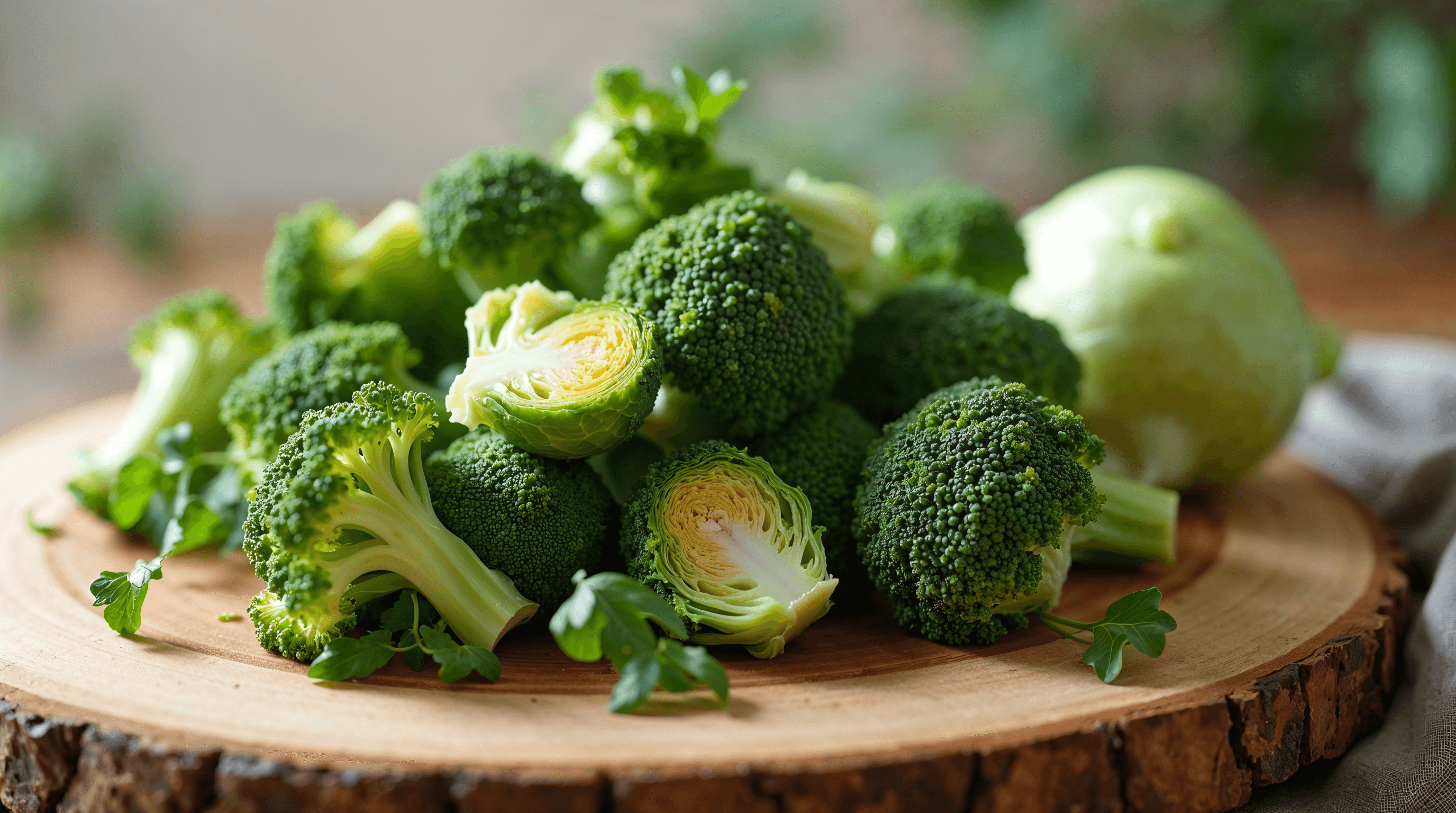
If there's one food group most strongly supported by research for estrogen dominance, it's cruciferous vegetables. Broccoli, cauliflower, Brussels sprouts, cabbage, kale, arugula, and bok choy contain a compound called indole-3-carbinol (I3C), which converts to diindolylmethane (DIM) in the gut.
DIM is a powerful modulator of estrogen metabolism. Research published in Cancer Epidemiology, Biomarkers & Prevention found that adding Brassica vegetables to the diet significantly shifted estrogen metabolism toward the protective 2-hydroxy pathway — measurable in just weeks.
How Much Do You Need?
Studies used approximately 500g per day of Brassica vegetables to show significant shifts. In practical terms, aim for 2–3 cups daily of raw or cooked cruciferous vegetables. Steam lightly rather than boiling to preserve myrosinase enzyme activity.
Fiber: The Estrogen Binder
Estrogen that has been processed by the liver gets conjugated and sent to the gut via bile. High dietary fiber is essential for binding and excreting this estrogen before gut bacteria can cleave the conjugate and reabsorb it.
An enzyme produced by certain gut bacteria — beta-glucuronidase — can deconjugate estrogen, freeing it to be reabsorbed from the colon back into circulation. Calcium-D-glucarate — found naturally in apples, grapefruit, and cruciferous vegetables — directly inhibits beta-glucuronidase activity.
- Ground flaxseed (1–2 tbsp daily): Contains lignans that bind estrogen receptors AND fiber that speeds transit
- Legumes: Excellent soluble fiber plus phytoestrogens
- Apples and pears: Pectin fiber + D-glucaric acid precursors
- Oats and oat bran: Beta-glucan fiber, supports blood sugar stability
Target: At least 25–35g of dietary fiber daily.
Liver-Supporting Foods
The liver handles estrogen detoxification in two phases. Both need nutritional support to run efficiently.
- Sulfur-rich alliums: Garlic, onions, leeks — provide glutathione precursors for Phase II detox
- Bitter greens: Dandelion, endive, radicchio — stimulate bile production for estrogen excretion
- Beets: Contain betaine which supports methylation, a key Phase II pathway
- Turmeric with black pepper: Curcumin modulates CYP1B1 enzyme activity
- High-quality protein: Eggs, wild salmon, legumes provide amino acids for Phase II conjugation
“The liver is the great metabolic workhorse. Feed it the right raw materials — sulfur from alliums, folate from greens, B12 from quality protein — and estrogen clearance happens efficiently. Starve it with processed food and alcohol and the detox machinery grinds to a halt.”
Dr. Mark Hyman, MD
Founder, UltraWellness Center · Source: The UltraWellness Solution
Phytoestrogens: Working With Estrogen, Not Against It
Phytoestrogens are plant compounds that competitively bind estrogen receptors with much weaker activity than your body's own estrogen. When they occupy estrogen receptors, they can reduce the impact of stronger endogenous estrogens.
- Ground flaxseed: Highest lignan content of any food — 1–2 tbsp daily
- Fermented soy (miso, tempeh, natto): Isoflavones in fermented form are well-tolerated
- Sesame seeds: Second highest lignan content after flaxseed
Foods to Minimize or Avoid
Certain foods actively impair estrogen metabolism or increase estrogenic load:
- Alcohol: Impairs liver detox pathways, increases aromatase activity, depletes B vitamins
- Refined sugar: Drives insulin resistance, promotes gut dysbiosis
- Conventional meat and dairy: May contain synthetic hormones — choose organic, pasture-raised
- Foods heated in plastic: BPA and phthalates are xenoestrogens — use glass or stainless steel
The Gut Microbiome Connection
Your gut bacteria regulate estrogen through the estrobolome — the collection of gut bacteria that produce enzymes capable of metabolizing estrogen. A healthy microbiome maintains low beta-glucuronidase activity, promoting healthy estrogen excretion.
- Fermented foods daily: Yogurt, kefir, sauerkraut, kimchi, kombucha
- Prebiotic fiber: Garlic, onions, asparagus, Jerusalem artichoke
- 30+ plant foods per week: Maximizes microbiome diversity
How Long Before You See Results?
- Weeks 1–2: Reduced bloating, improved digestion
- Weeks 3–6: Improvements in breast tenderness, PMS, mood
- Cycles 2–3: Measurable changes in estrogen metabolite ratios on testing
- 3–6 months: Significant hormonal rebalancing
When to Work With a Practitioner
Dietary intervention is powerful, but some situations warrant professional support — severe symptoms, suspected endometriosis or PCOS, perimenopause, or interest in hormone testing like the DUTCH Complete panel. Learn more about how to balance hormones naturally.
This article is for educational purposes only and does not constitute medical advice.
Frequently Asked Questions
What foods cause estrogen dominance?▾
How long does it take for diet to improve estrogen dominance?▾
Is soy bad for estrogen dominance?▾
Can flaxseed help with estrogen dominance?▾
What vegetables are best for estrogen dominance?▾
Does alcohol really affect estrogen levels?▾
References
- 1.Fowke JH, et al. Brassica vegetable consumption shifts estrogen metabolism in healthy postmenopausal women. Cancer Epidemiol Biomarkers Prev. 2000;9(8):773-9. PubMed ↩
- 2.Calcium-D-glucarate. Altern Med Rev. 2002;7(4):336-9. PubMed ↩
- 3.Dietary fiber and estrogen metabolism review. PubMed 2018. PubMed ↩
- 4.Dietary patterns and endogenous estrogen levels in premenopausal women. PubMed 2012. PubMed ↩
- 5.Bonorden MJ, et al. Consumption of Lactobacillus acidophilus and Bifidobacterium longum do not alter urinary equol excretion and plasma reproductive hormones. Eur J Clin Nutr. 2004;58(12):1635-42. PubMed ↩