There's No Such Thing as Unexplained: Cassandra Nelson on Root-Cause Fertility Care
Acupuncturist Cassandra Nelson challenges the diagnosis of "unexplained infertility" and explains how Traditional Chinese Medicine finds what conventional testing misses.
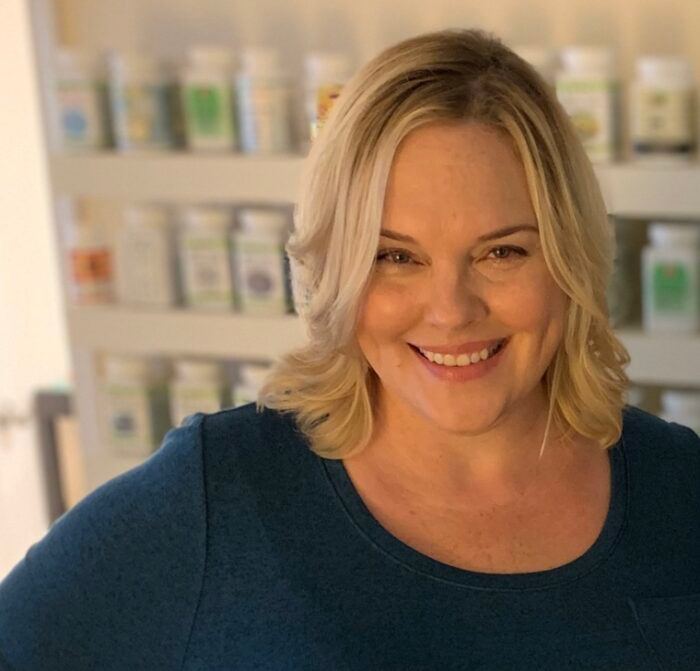
Cassandra Nelson, MS, LAc · Licensed Acupuncturist, Acupuncture & Fertility · · 9 min read
Reviewed by Holistic Health Clinical Team

Key Takeaways
- ✓"Unexplained infertility" often means conventional testing hasn't identified the root cause yet
- ✓Traditional Chinese Medicine evaluates patterns that standard fertility testing doesn't measure
- ✓Fertility is about creating the conditions for life, not forcing conception
- ✓Removing obstacles allows the body to perform better and pregnancy to follow naturally
- ✓There is always room for hope on the fertility journey
When Cassandra Nelson hears a patient say they've been diagnosed with "unexplained infertility," she doesn't accept it. Not because she's dismissive of conventional medicine, but because in her experience, "unexplained" almost always means "not yet explained."
As a licensed acupuncturist specializing in fertility at Acupuncture & Fertility in Greenville, South Carolina, Cassandra has built her practice around a simple but radical premise: if you look carefully enough, there is always a reason.
Challenging the Diagnosis
"I often hear the term 'unexplained infertility,' which isn't real. It often just means your providers haven't looked hard enough at your case to understand why you're not getting or staying pregnant. There really is no such thing as 'unexplained' in Traditional Chinese Medicine."
Unexplained infertility affects an estimated 15 to 30 percent of couples seeking fertility care [1]. It's one of the most frustrating diagnoses in medicine — every standard test comes back normal, yet pregnancy doesn't happen.
But Traditional Chinese Medicine operates from a different diagnostic framework. Where conventional testing measures hormone levels, fallopian tube patency, and sperm parameters, TCM practitioners assess the quality and timing of the menstrual cycle, basal body temperature patterns, digestive function, sleep quality, emotional state, and constitutional patterns through pulse and tongue diagnosis.
A meta-analysis of TCM for female infertility found that assessment of menstrual cycle quality — central to TCM diagnosis but rarely prioritized in conventional care — "appears to be fundamental to successful treatment" [1].
Creating Conditions, Not Forcing Outcomes
Cassandra's approach to fertility is fundamentally different from the conventional model of intervention. Rather than trying to override the body's signals with medications, she works to understand what those signals are telling her — and then removes the obstacles.
"My approach to fertility care is centered on high-functioning bodies and calm, resilient minds. Fertility isn't just about conceiving — it's about living a joy-filled fertile life. Less measuring and timing. More creating the kind of foundation where life naturally wants to grow."
This philosophy aligns with an emerging understanding in reproductive medicine. Research has established that chronic stress suppresses the hypothalamic-pituitary-gonadal axis — the system that drives ovulation and conception [4]. When the nervous system is locked in a state of high alert, the body deprioritizes reproduction.
Acupuncture has been shown to regulate the autonomic nervous system, shifting the body toward parasympathetic dominance and improving blood flow to reproductive organs [3]. A 2024 meta-analysis of 38 randomized controlled trials found that acupuncture significantly improved clinical pregnancy rates during IVF, with stronger effects in longer treatment protocols [2].
Root Cause Over Bypass
The philosophical divide between conventional and integrative fertility care often comes down to a single question: Do you bypass the body, or do you work with it?
"Conventional approaches often seek to bypass your body with medications, whereas I look to find the root cause of the issue and resolve it. Once obstacles are removed, your body performs better and pregnancy eventually follows."
In Cassandra's practice, this means two women presenting with the same diagnosis may receive completely different treatments. One might have what TCM calls blood stasis — poor circulation to the uterus that affects implantation. Another might have kidney yang deficiency — a constitutional pattern affecting egg quality and energy levels. The treatments — specific acupuncture points, herbal formulas, dietary guidance — follow the individual pattern, not the generic diagnosis.
This level of individualization is something conventional fertility care rarely offers. Standard IVF protocols are largely the same regardless of underlying constitution. But research increasingly suggests that personalized approaches may improve outcomes, particularly for women who haven't responded to standard treatments [1].
The Foundation of Hope
What makes Cassandra's practice distinctive isn't just her clinical approach — it's her unwavering belief that fertility struggles are not dead ends.
"There is so much room for hope on your fertility journey."
For women who have been through rounds of failed treatments, hearing that there are still avenues to explore — that their body isn't broken, that the right assessment might reveal what's been missed — can be the most important part of the journey.
Cassandra's message is clear: if you've been told your infertility is unexplained, that's not the end of the conversation. It might be the beginning of a very different one.
Frequently Asked Questions
What does "unexplained infertility" really mean?▾
How is TCM fertility care different from conventional treatment?▾
How long does TCM fertility treatment take?▾
References
- 1.Ried K. Chinese herbal medicine for female infertility: an updated meta-analysis. Complement Ther Med. 2015;23(1):116-128. PubMed ↩
- 2.Liu Y, et al. Acupuncture on Pregnancy Outcomes for Infertile Women Undergoing IVF-ET. Reprod Sci. 2024;31(8):2166-2182. PubMed ↩
- 3.Smith CA, et al. Acupuncture Treatment for Fertility. Curr Opin Obstet Gynecol. 2018;30(4):229-234. PMC ↩
- 4.Joseph DN, Whirledge S. Stress and the HPA Axis: Balancing Homeostasis and Fertility. Int J Mol Sci. 2017;18(10):2224. PMC ↩